
Increase access to safe and affordable housing through innovative practices in financing models, building materials, and policy
Nonprofits exemplify this practice by:
- Building safer, more affordable housing that reflects community needs
- Ensuring that new and existing housing is disaster resilient
- Providing better information and advocating for better housing policies


Globally, 1.6 billion people live in inadequate, unsafe housing conditions,[1] and more than 150 million people are homeless.[2]
Stabilizing housing gives people the ability to address other critical needs, such as preexisting mental health issues[3] or children’s academic achievement,[4] more effectively. When people have stable housing, they spend less time in the emergency room, decrease substance use,[5] and have fewer and less intense mental illness symptoms.[6]
Increasing housing stability is also cost-effective. A review of programs in the United States that provided people with housing without preconditions found an average benefit-to-cost ratio of 1.8:1, meaning that for every $1 spent on these programs, $1.80 was returned to society due to reduced use of public services.[7]
The current supply of affordable housing worldwide is not enough to meet demand. The United Nations estimates that to meet the demand of the world’s population by 2030, 96,000 new affordable and accessible housing units must be built every day.[8]
Nonprofit organizations can help meet this demand by building affordable housing that meets community needs. For example, Rural Homes is building affordable housing for essential workers in Telluride, Colorado, a community that is facing a severe affordable housing crisis.
When housing, both newly constructed and existing, is also disaster resilient, homes stay safe and habitable for years to come. Organizations can build new housing with environmental hazards in mind. For example, a new home in an earthquake-prone area could be built with reinforced walls. Existing housing can be repaired using more resilient materials, like stronger roofs.[9]
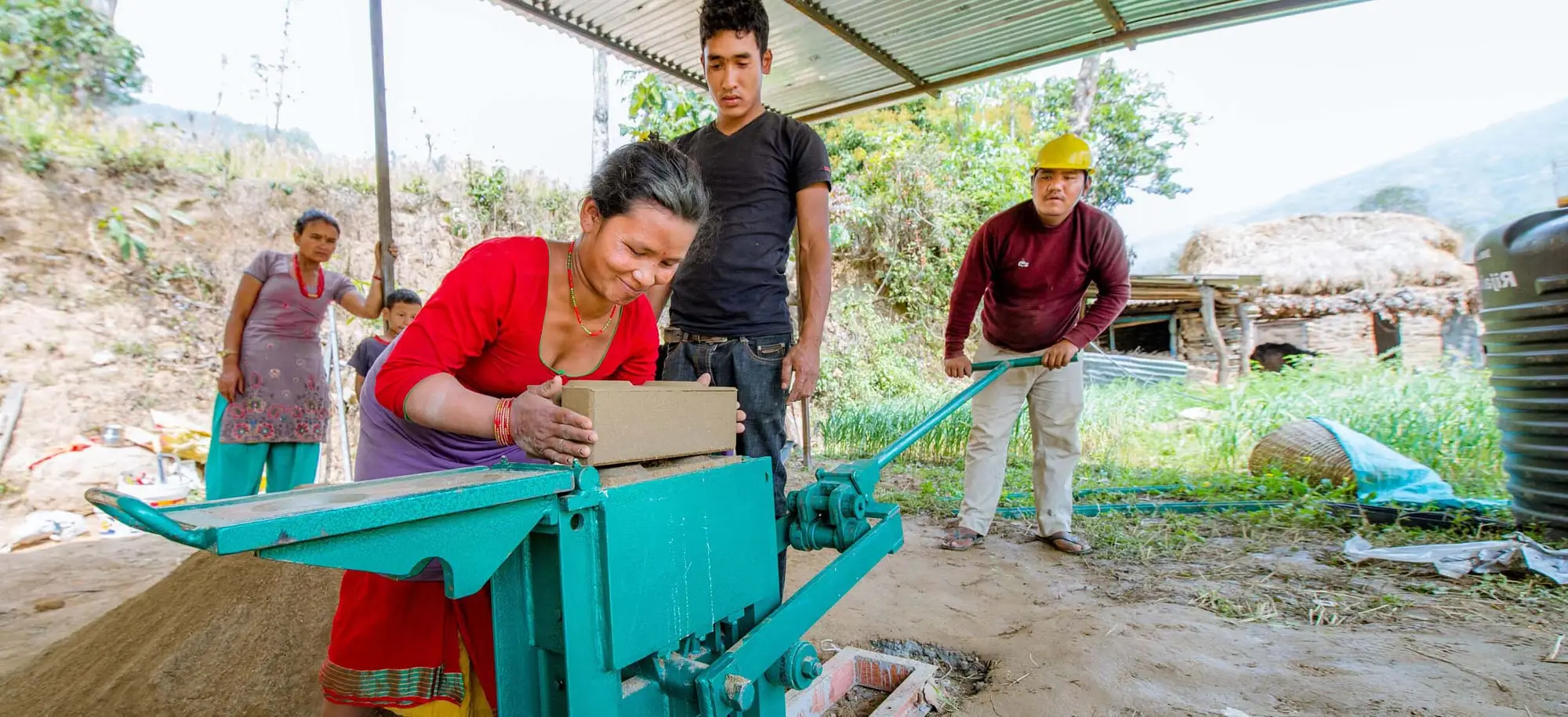
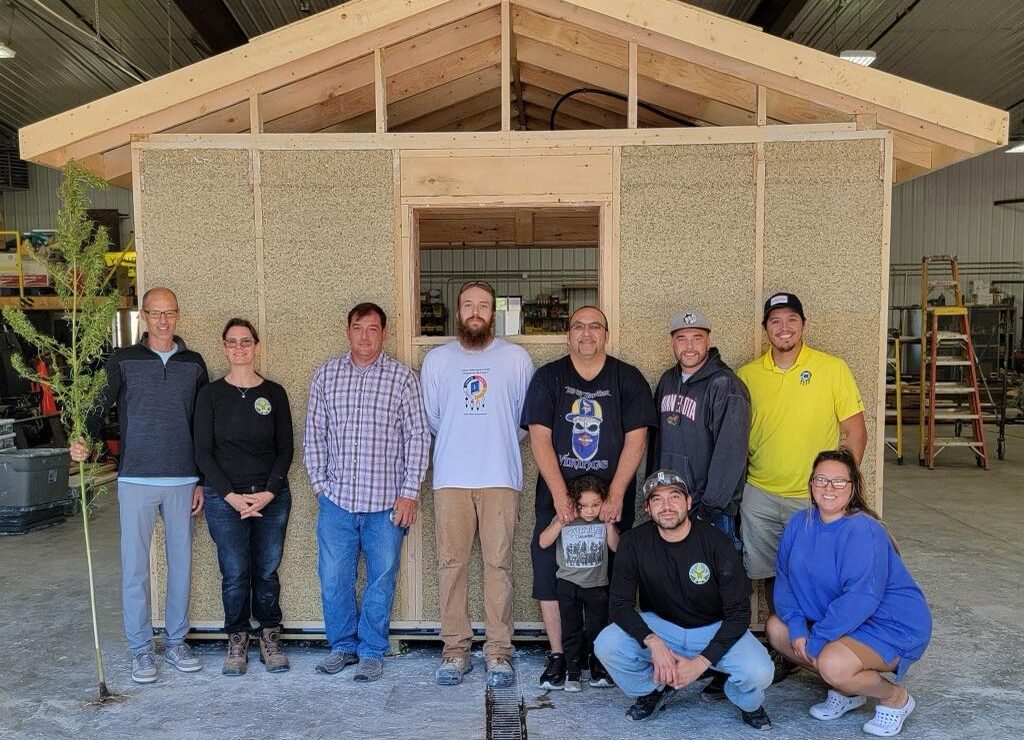
Following a series of natural disasters that destroyed hundreds of thousands of houses in rural Nepal, Build Up Nepal began working with local entrepreneurs to build disaster-resilient, affordable, and eco-friendly housing using bricks made of recycled stone dust. Similarly, on a reservation in Minnesota that is facing a housing shortage, Lower Sioux Indian Community Hemp Program and Housing Project is building durable, affordable housing out of fire-resistant hempcrete. It also uses hempcrete to reframe dilapidated existing buildings, increasing their resilience.
Despite the need, policies and regulations around housing and land use, particularly zoning laws, severely restrict developers’ and other entities’ ability to build affordable housing.[10]
Nonprofits that work to provide information and advocate for better housing policies can help increase the availability and safety of housing. For example, the National Zoning Atlas creates publicly accessible online maps of zoning laws in over 33,000 jurisdictions in the United States. It then analyzes this data and works with advocates and policymakers to implement reforms.
What follows are more detailed profiles of these four organizations. All are real-world examples of how to implement these best practices.
Notes
[1] United Nations Human Settlements Programme. (2022). World Cities Report 2022: Envisaging the Future of Cities. United Nations Human Settlements Programme. https://unhabitat.org/sites/default/files/2022/06/wcr_2022.pdf
[2] World Economic Forum. (2021, October 29). These innovative projects are tackling homelessness around the world. World Economic Forum. https://www.weforum.org/stories/2021/10/innovative-projects-tacklinghomelessness-around-the-world/
[3] Baxter, A. J., Tweed, E. J., Katikireddi, S. V., & Thomson, H. (2019). Effects of Housing First approaches on health and well-being of adults who are homeless or at risk of homelessness: Systematic review and metaanalysis of randomised controlled trials. Journal of Epidemiology and Community Health, 73(5), 379–387. https://doi.org/10.1136/jech-2018-210981
[4] Sandstrom, H., & Huerta, S. (2013). The Negative Effects of Instability on Child Development(Low-Income Working Families Fact Sheet). Urban Institute. https://www.urban.org/sites/default/files/publication/32721/412908-The-Negative-Effects-of-Instability-on-Child-Development-Fact-Sheet.PDF
[5] Larimer, M. E., Malone, D. K., Garner, M. D., Atkins, D. C., Burlingham, B., Lonczak, H. S., Tanzer, K., Ginzler, J., Clifasefi, S. L., Hobson, W. G., & Marlatt, G. A. (2009). Health Care and Public Service Use and Costs Before and After Provision of Housing for Chronically Homeless Persons With Severe Alcohol Problems. JAMA, 301(13), 1349–1357. https://doi.org/10.1001/jama.2009.414
[6] Ferreiro, I. C., Cuadra, M. A. R., Serqueda, F. A., & Abad, J. M. H. (2022). Impact of Housing First on Psychiatric Symptoms, Substance Use, and Everyday Life Skills Among People Experiencing Homelessness. Journal of Psychosocial Nursing and Mental Health Services, 60(9), 46–55. https://doi.org/10.3928/02793695-20220316-01
[7] Jacob, V., Chattopadhyay, S. K., Attipoe-Dorcoo, S., Peng, Y., Hahn, R. A., Finnie, R., Cobb, J., Cuellar, A. E., Emmons, K. M., & Remington, P. L. (2022). Permanent Supportive Housing With Housing First: Findings From a Community Guide Systematic Economic Review. American Journal of Preventive Medicine, 62(3), e188–e201. https://doi.org/10.1016/j.amepre.2021.08.009
[8] UN- Habitat. (2025). Housing | UN-Habitat. UN-Habitat: Housing. https://unhabitat.org/topic/housing
[9] Build Change. (2021). The Build Change Guide to Resilient Housing: An Essential Handbook for Governments and Practitioners. Build Change. https://buildchange.org/guide-to-resilient-housing/
[10] Woetzel, L., Sangeeth, R., Peloquin, S., Limam, M., & Mischke, J. (2017). Housing affordability: A supplyside tool kit for cities. McKinsey Global Institute. https://www.mckinsey.com/featured-insights/future-ofcities/housing-affordability-a-supply-side-tool-kit-for-cities