
Unlock early learning through a web of support at home, in school, and in the neighborhoods where children live
Nonprofits exemplify this practice by:
- Supporting the development of healthy parenting skills that foster positive relationships between children and the adults in their lives
- Taking a two-generation approach: combining high-quality early childhood education with programs designed to increase families’ income
- Turning community members into teachers and commonly visited places into settings for learning


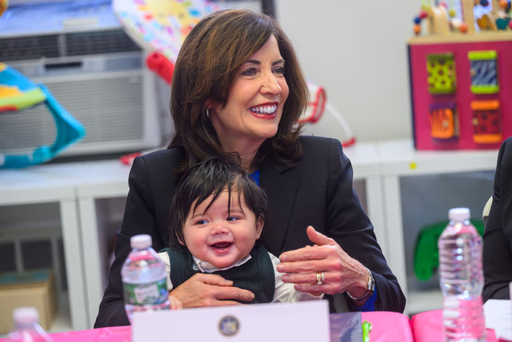
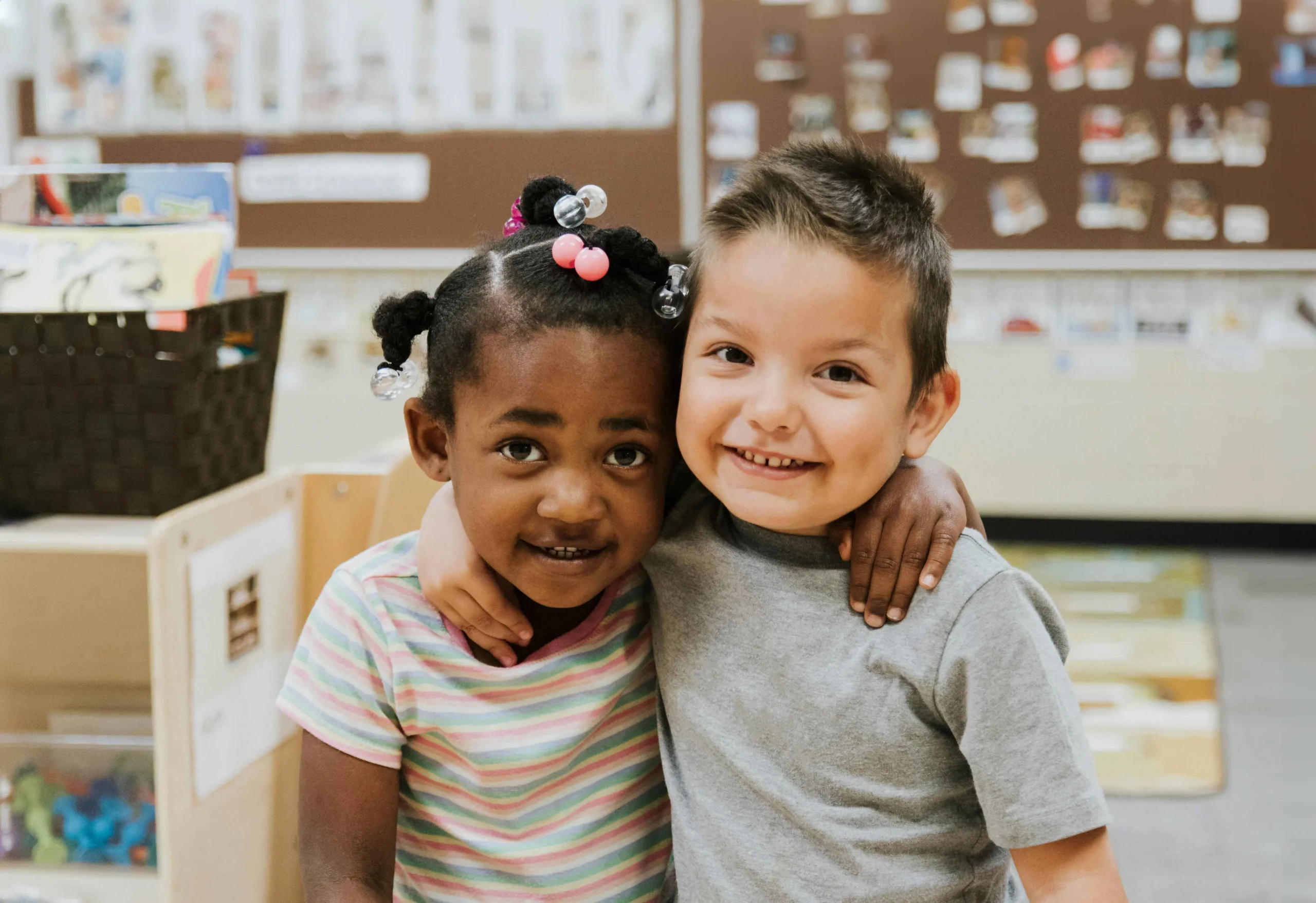
Young children are dependent on a web of support — parents, caregivers, community members — not only for their safety and health, but also for the daily, positive interaction that shapes their brain development and future ability to learn.
Early childhood, defined here as birth to age 8, is a key time in children’s lives. During this period, their brains are developing most rapidly, establishing a foundation for all future learning.[1] Especially during this period, what happens in school depends on what happens at home. Children with caregivers experiencing high levels of stress, often because of low incomes or uncertain employment, have poorer educational outcomes than their peers [2,3] meaning that learning disparities begin before a child even enters the classroom.
Research shows that developing the parenting skills of children’s caregivers positively impacts children’s brain development, educational outcomes, and health.[4, 5] Nonprofits like AÇEV work with parents in Turkey to develop healthy parenting skills, resulting in increased reading and math skills for their children.
Because childhood poverty and low levels of parental education are associated with poor early educational outcomes, providing parents with cash, job training, and assistance in pursuing education programs can support their children’s early learning.[6] The Bridge Project funds the well-being of children by providing low-income mothers in the United States with unconditional payments and community resources during pregnancy and the first several years of their child’s life.
Research also shows that an increase in parents’ education of 1 year reduces the probability that a child repeats a grade by up to 7% and lowers the likelihood that students drop out of high school.[7] CAP Tulsa’s two-generation approach illustrates how.
The most effective literacy programs and organizations engage children’s caregivers,[8] and happen wherever children are — in the classroom and outside of it.[9] Barbershop Books establishes reading spaces in local barbershops and collects children’s reading preferences so that caregivers and teachers can personalize reading time.
What follows are more detailed profiles of these four organizations. All are real-world examples of how nonprofits implement these best practices. For more resources on supporting children, see CHIP’s Early Childhood Toolkit, Early School Success Toolkit, and Two-Generation Lens Guide.
Notes
[1] Center on the Developing Child at Harvard University. (2019, February 19). Timing and Critical Periods. Center on the Developing Child at Harvard University. https://developingchild.harvard.edu/keyconcept/timing-and-critical-periods/
[2] Duncan, G. J., Morris, P. A., & Rodrigues, C. (2011). Does Money Really Matter? Estimating Impacts of Family Income on Young Children’s Achievement With Data From Random-Assignment Experiments. Developmental Psychology, 47(5), 1263–1279. https://doi.org/10.1037/a0023875
[3] Soltis, K., Davidson, T. M., Moreland, A., Felton, J., & Dumas, J. E. (2015). Associations Among Parental Stress, Child Competence, and School-Readiness: Findings from the PACE Study. Journal of Child and Family Studies, 24(3), 649–657. https://doi.org/10.1007/s10826-013-9875-2
[4] Neville, H. J., Stevens, C., Pakulak, E., Bell, T. A., Fanning, J., Klein, S., & Isbell, E. (2013). Family-based training program improves brain function, cognition, and behavior in lower socioeconomic status preschoolers. Proceedings of the National Academy of Sciences, 110(29), 12138–12143. https://doi.org/10.1073/pnas.1304437110
[5] Johnson, G. M., Lagbenro, I., Childs, M., Nandin, A., Hoang, A., Hilton, C., Kitchens, R., & Ghulmi, L. (2024). Efficacy of Parenting Education for Adolescent Parents and Impact on Child’s Development: A Systematic Review. Occupational Therapy In Health Care, 0(0), 1 -15. https://doi.org/10.1080/07380577.2025.2466204
[6] Sastry, N., & Pebley, A. R. (2010). Family and neighborhood sources of socioeconomic inequality in children’s achievement. Demography, 47(3), 777–800. https://doi.org/10.1353/dem.0.0114
[7] Oreopoulos, P., Page, M. E., & Stevens, A. H. (2006). The Intergenerational Effects of Compulsory Schooling. Journal of Labor Economics, 24(4), 729–760. https://doi.org/10.1086/506484
[8] Reynolds, A. J. (1989). A structural model of first-grade outcomes for an urban, low socioeconomic status, minority population. Journal of Educational Psychology, 81(4), 594–603. https://doi.org/10.1037/0022-0663.81.4.594
[9] de Bondt, M., Willenberg, I. A., & Bus, A. G. (2020). Do Book Giveaway Programs Promote the Home Literacy Environment and Children’s Literacy-Related Behavior and Skills? Review of Educational Research, 90(3), 349–375. https://doi.org/10.3102/0034654320922140