
Improve child and maternal health outcomes and education
“I’m well known to the community. I feel like they are my sisters and daughters. I care for them and they trust me.”
-BRAC Community Health Worker
“The [Community Health Workers] are like sisters to me. We’ve known each other for a long time. I feel safe with them.”
-BRAC Patient
Location: Asia and Africa
Based in Bangladesh and operating in fifteen countries across Asia and Africa, BRAC is the largest non-governmental development organization in the world and runs some of the longest-running community health models.
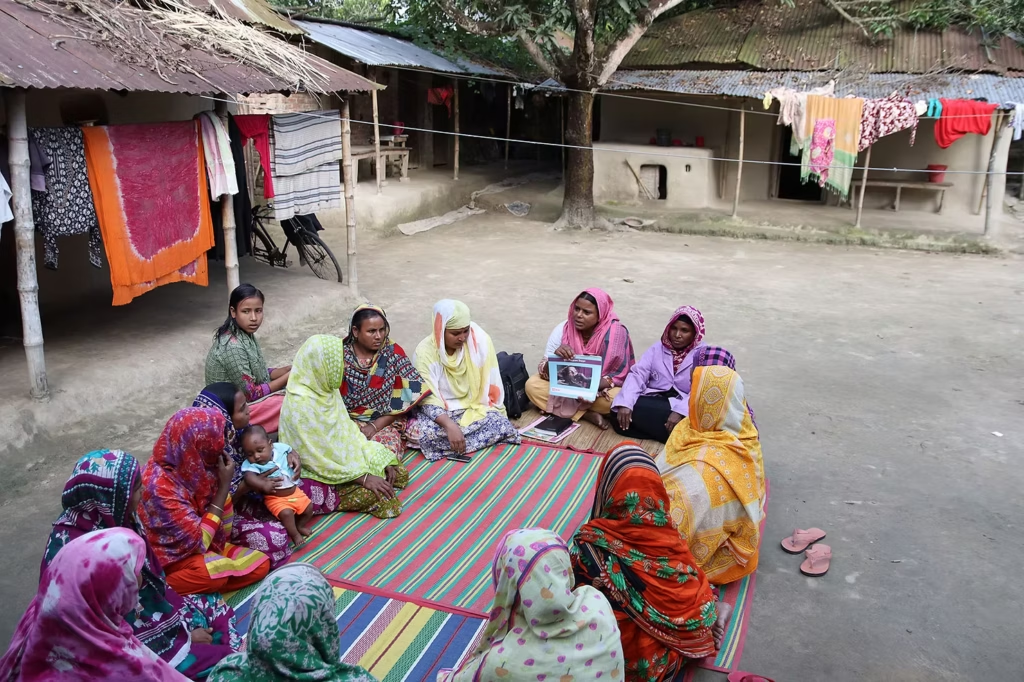
BRAC trains a network of nearly 100,000 community health workers (CHWs), mainly women, to conduct home visits where they educate households on essential health behaviors, provide basic medical care and preventative care like vaccines, and refer cases to health centers as needed. BRAC CHWs focus primarily on mothers and children, emphasizing common and often fatal diseases like diarrheal illness and tuberculosis.
CHWs also sell health-promoting products, like soap, sanitary pads, and bed nets that they purchase for wholesale prices and sell to their patients, earning a small profit. This both increases the use of health-promoting products and provides CHWs with a living wage.
Community health workers are equipped with a mobile app to report on their activities and the health of their patients. BRAC then uses this data to improve how CHWs provide care.
A long-term randomized control trial evaluating BRAC’s program in Uganda found that BRAC’s intervention reduced child mortality in children under five by approximately 27%, children under 1-year’s mortality by 33%, and under 1-month mortality by 28%. The cost-per-averted-death was approximately US$4,000, about one-third the cost of comparable healthcare delivery methods. [1]
Learn more: https://www.bracusa.org
More ways to help
Lwala Community Alliance uses a community health model to treat preventable diseases in Kenya. Domestically, Changent uses a community health model to provide free health services to children and their families in their homes.
For more guidance and organizations working in community health, see CHIP’s Community-Based Approaches to Health Guide.
Notes
[1] Nyqvist, M. B., Guariso, A., Svensson, J., & Yanagizawa-Drott, D. (2019). Reducing Child Mortality in the Last Mile: Experimental Evidence on Community Health Promoters in Uganda. American Economic Journal: Applied Economics, 11(3), 155–192. https://doi.org/10.1257/app.20170201